


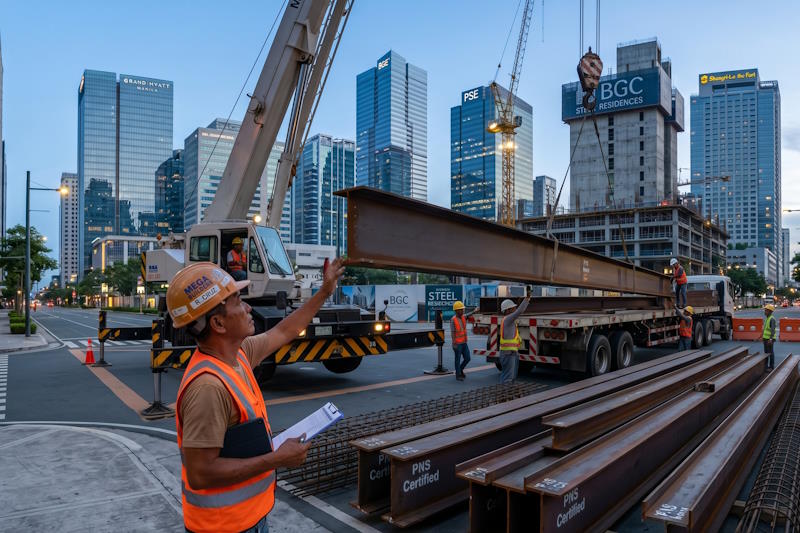
For people who are building things in the Philippines like real estate developers, industrial company owners and project managers structural steel is the part of your investment. If you are building an office building in Bonifacio Global City, making a factory bigger in Calamba or building a warehouse in Davao, the steel you choose is very important for your project’s safety, budget and timeline.
There are steel suppliers in the Philippines and some of them may not be good. If you choose the supplier it can cause big problems like the building falling down, delays or legal issues.
How To Choose The Right Structural Steel Supplier
Here is a simple guide to help you choose the structural steel supplier in the Philippines so your project goes well and you stay within budget.
1. Check if the supplier follows Philippine National Standards (PNS)
The Philippines can have earthquakes and strong typhoons. Because of this the steel used for buildings must be safe. You cannot just believe what the supplier says, you need to see proof.
Look for PNS Certifications: Make sure the supplier’s products follow the rules of the Bureau of Philippine Standards (BPS) and have the PNS certifications, like PNS 49 for steel bars or PNS 656 for structural steel shapes.
Ask for Mill Test Certificates (MTC): A good supplier should give you an MTC for every batch of steel. This paper shows that the steel quality has been tested and is good.
Check if the supplier can track the steel: Make sure the supplier can show where the steel came from so you can avoid fake steel.
2. Check the suppliers ability to make and design steel
A good supplier does not just deliver steel they also understand how to use it. For projects you often need steel that is already made and can be put together quickly.
Check if the supplier has a factory: See if the supplier has a place where they can make steel with machines like CNC cutting and drilling machines. This ensures that the steel is made well and is the size.
Check if the supplier has engineers: See if the supplier has people who can read your plans, find problems and suggest good solutions without making the building less safe.
Check if the supplier uses good software: Ask if they use software like Tekla Structures. This ensures that the drawings of the steel match your plans perfectly so there are no mistakes when building.
3. Check the suppliers ability to deliver steel
In the Philippines getting things from one place to another can be hard. There can be traffic, bad roads and weather problems that can stop your steel from being delivered.
Before you sign a contract make sure you know how the supplier will deliver the steel:
Check if the supplier has trucks: See if the supplier has good trucks and equipment to deliver the steel or if they rely on other companies.
Check the delivery schedule: Make sure the supplier can deliver the steel when you need it so your project is not delayed.
Check if the supplier can deliver to places: If your project is in a different part of the Philippines like the Visayas or Mindanao make sure the supplier can deliver steel there without problems.
4. Check the suppliers money and ability to grow
Steel is a part of your project’s budget. If the supplier has money problems it can stop your project.
Check if the supplier is financially stable: Look for suppliers who can offer payment terms or work well with your bank.
Check the suppliers inventory: Visit the suppliers warehouse if you can. A supplier with an inventory is less likely to delay your project.
Check the suppliers work: Look at the suppliers projects. Have they worked on projects like yours before? Ask project managers or developers about their experience with the supplier.
5. Check the suppliers ability to protect the steel
The Philippines has a humid climate and many industrial areas are near the sea, where the air can make the steel rust. Steel protection is very important for your building’s longevity.
The supplier should offer ways to protect the steel:
Hot-Dip Galvanizing (HDG): This is good for industrial plants, coastal warehouses and buildings that are outside. Make sure the supplier works with galvanizing plants.
Standard Priming: For steel that’s inside make sure the supplier uses good uniform paint to protect it from rust.
Proper Storage: Check that the supplier stores the steel well off the ground and protected from much moisture before delivering it.
The important thing is to not just look at the price
While staying within budget is important, choosing a supplier just because they are cheap is not a good idea. Bad steel, delays and poor work can cost you money in the long run.
Choose a supplier that follows the rules, can make steel deliveries on time and is financially stable. That is how you can ensure your investment is safe and your building will last.
Are you ready to choose a trusted supplier? Contact us today!
Leave a Reply