

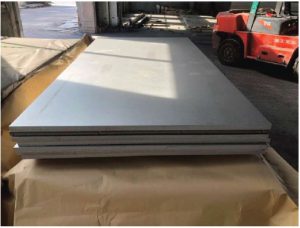
STAINLESS STEEL PLATE is used in all aspects of architecture, building and industrial and construction.
Air pollution, salt exposure, weather patterns, design and cleaning frequency must be considered when selecting stainless steel and other construction materials if good long term performance is desired.
Stainless steel plate, coil and strip is used in abundance when constructing a high-rise building, and is used to create lintels, welded to form shelf angles, windposts, masonry supports, wall starters and much more
Stainless steel is thus ideal for food production and storage as it does not affect the flavour of the food and the corrosion resistance is an important factor when it comes into contact with acidic foods. Stainless steel is easily cleaned which keeps germs at bay, in turn maintaining the integrity of any sterile environment, including that of the medical industry, surgical instruments, major appliances, industrial equipment and as an automotive and aerospace structural alloy.
Stainless steel sheets, aiso commonly known as Cold Rolled Products, can be moulded into shapes for making cookware, such as grills, sinks, pots and cookers. Stainless steel sheet is popular as a finish for refrigerators, freezers, countertops and dishwashers.
Three of the most common grades of stainless steel are 304, 316 and 410. 304 and 304L are the most commonly used grade for sheet and plate as it is less expensive, highly versatile and offers corrosion resistance while also maintaining its durability. For coastal and marine environments grade 316 is often favoured due to its superior corrosion resistance.
Some materials are ASTM A310s, 210 Duplex & Super Duplex
TYPES OF STAINLESS STEEL PLATES AND THEIR USAGE
STAINLESS STEEL PLATE ASTM A240-TP304L
The Stainless Steel Plate ASTM A240-TP304L is a low-carbon version of the 304 grade, designed for enhanced weldability and corrosion resistance, particularly in welded structures and environments where high temperature and chemical exposure are common. Manufactured under the ASTM A240 specification, TP304L stainless steel plate offers excellent formability, strength, and durability, making it ideal for applications in the chemical, food processing, pharmaceutical, and marine industries. With a composition rich in chromium and nickel, this alloy provides outstanding resistance to oxidation and general corrosion, while the low carbon content minimizes the risk of carbide precipitation during welding. Its smooth surface finish and high structural integrity also make it a popular choice for architectural and structural applications.
STAINLESS STEEL PLATE ASTM A240-TP316L
316 grade is the second-most common form of stainless steel. It has almost the same physical and mechanical properties as 304 stainless steel, and contains a similar material make-up. The key difference is that 316 stain-less steel incorporates about 2 to 3 percent molybdenum. The addition increases corrosion resistance, particularly against chlorides and other industrial solvents.
316 stainless steel is commonly used in many industrial applications involving processing chemicals, as well as high-saline environments such as coastal regions and outdoor areas where de-icing salts are common. Due to its non-reactive qualities, 316 stainless steel is also used in the manufacture of medical surgical instruments.
Alternative 300-series grades can contain up to 7 percent molybdenum. They provide even better chloride resistance, but such heavy-duty resistance is only necessary in industrial or high concentration exposure conditions.
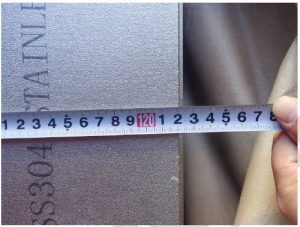
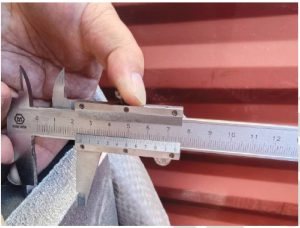
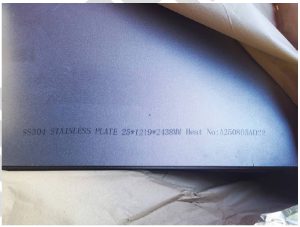
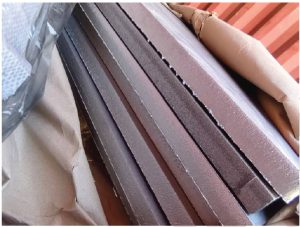
STAINLESS STEEL PLATE SPECIFICATIONS
| 304 / 304L / 304H | DUPLEX / SUPER DUPLEX |
| 316 / 316L / 316H/316TI | 31803 |
| 321 / 321H | S32750 / S32760 |
Our Stainless steel plate prices will be available based on the current Philippines market and therefore you are assured with a fair trade from us.