



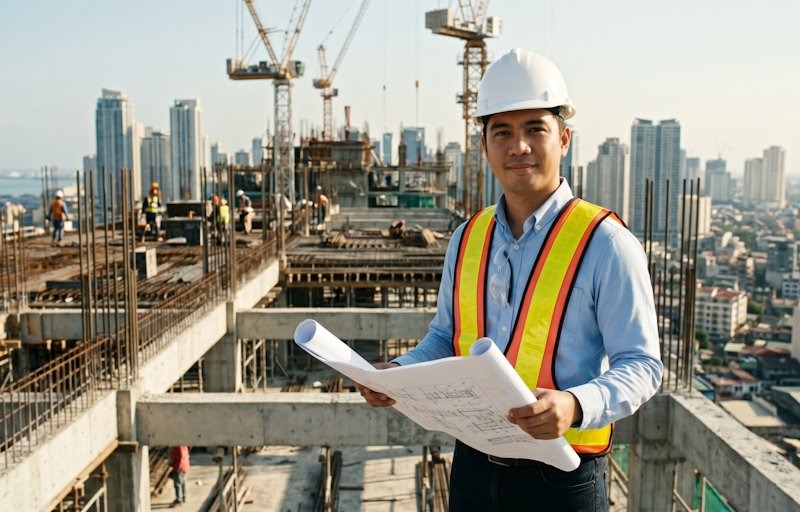
The Philippines is located on the Pacific Ring of Fire. This is a concern for construction professionals in Metro Manila. A big earthquake, called “The Big One” can happen anytime. Construction project managers and structural engineers in Metro Manila and nearby areas like Cavite, Laguna and Bulacan must use earthquake-proof construction methods.
- Traditional construction methods are not enough to protect buildings from earthquakes.
- The National Structural Code of the Philippines (NSCP) 2015 sets standards for earthquake-proof construction.
NSCP 2015 Standards
The NSCP is like a guidebook for Filipino engineers. The 2015 update emphasizes the importance of buildings being able to bend and sway without collapsing during an earthquake.
- Standard steel bars (rebars) are not strong enough to protect buildings from earthquakes.
- Seismic-grade steel is stronger and more flexible making it essential for earthquake- construction.
Understanding Seismic Grade Steel
Seismic-grade steel is like gum. It can stretch and deform without breaking. This property, called ductility makes it perfect for earthquake-proof construction.
- Seismic-grade steel can withstand the shaking of an earthquake and maintain its integrity.
- Using rebars in critical areas is a huge risk in seismic risk management.
The Financial and Reputational Costs of Ignoring Seismic Risk Management
Ignoring risk management can have severe financial and reputational costs.
- The collapse of a high-rise structure results in loss of life and endless legal battles.
- Non-compliance during inspection can halt a project indefinitely resulting in penalty fees and extended timelines.
Focusing on Highly-Seismic Areas
Metro Manila and nearby areas like Rizal, Laguna and Bulacan are highly prone to earthquakes.
- Developers must prioritize high-tensile steel in areas like Quezon City, Cavite and Bulacan.
- Vertical load-bearing elements, beam-column joints and foundations must be designed to withstand earthquakes.
Simple Steps for Compliance
To ensure compliance with NSCP 2015 standards project managers must:
- Demand Mill Test Certificates (MTCs) for steel.
- Specify PNS and ASTM Grades for high-tensile steel.
- Educate team members on the difference between seismic-grade rebar.
Key Takeaways
- The seismic threat from “The Big One” is real. Demands more than standard construction materials.
- Compliance with NSCP 2015 standards requires the use of tensile highly-ductile seismic-grade steel.
- The higher initial cost of seismic-grade steel is an investment that reduces long-term safety liabilities.
Call to Action
Don’t compromise the safety of your projects. Ensure your next condominium tower is built with high-tensile seismic-grade steel that meets NSCP 2015 requirements.
Contact our sales team today to discuss your project specifications and secure compliant seismic steel. We provide material certification and engineering support, for your seismic risk management needs.
Contact Us Today to Secure Your Seismic Grade Steel

Leave a Reply